
Three Sea Granters Named Early Career Research Fellows
Three Louisiana Sea Grant personnel have been named Early Career Research Fellows by the Gulf Research Program (GRP) of the National Academies of Sciences, Engineering and Medicine. They are Jeffrey Plumlee, state-wide fisheries specialist; Elizabeth Robinson, Grand Isle oyster research lab director; and Vanessa van Heerden, education office engagement specialist.
Plumlee and Robinson are two of eight GRP fellows in the environmental protection and stewardship track working toward advancing scientific knowledge in the design, implementation and evaluation of nature-based solutions that enhance ecosystem health and community resilience. van Heerden is one of five GRP fellows joining the education research track working to advance STEM and environmental education by considering the impacts of establishing sense of place in formal and informal learning environments.
The Early Career Research Fellowship helps researchers during the pre-tenure phase of their careers. Fellows receive a $76,000 financial award along with mentoring support to provide them with independence, flexibility and a built-in support network as they take explore untested research ideas, pursue unique collaborations and build a network of colleagues.
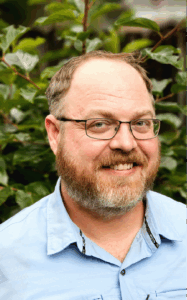 Plumlee is an assistant professor in the School of Renewable Natural Resources at the Louisiana State University (LSU) Agricultural Center and serves as Louisiana Sea Grant’s fisheries extension specialist. His research centers on fisheries ecology, with a focus on both the ecology of economically important species and the role of marine and estuarine habitats in producing new fish and invertebrate biomass. Plumlee’s lab conducts research across the coastlines of the southern United States, exploring diverse topics including oyster population dynamics and using biogeochemistry to examine movement of estuarine sportfish. In his role as an extension specialist, he works closely with Louisiana fishermen on fisheries issues and best management practices. He earned his B.S. in marine fisheries and his M.S. in wildlife and fisheries sciences from Texas A&M University, and his Ph.D. in ecology from the University of North Carolina at Chapel Hill. Before joining LSU, Plumlee completed a one-year postdoctoral fellowship at the University of South Alabama and the Dauphin Island Sea Lab. Since 2016, he has published more than 20 peer-reviewed articles in journals such as Ecology, Scientific Reports and Ecological Indicators.
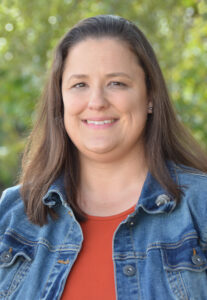 Robinson is the director of the Louisiana Sea Grant Oyster Research Laboratory at the Michael C. Voisin Oyster Hatchery, where she oversees production of oyster larvae and seed for statewide restoration and Louisiana’s oyster aquaculture industry. Her applied research integrates coastal ecology, aquaculture innovation and habitat restoration, focusing on improving hatchery efficiency, enhancing larval performance and settlement and developing strategies that strengthen coastal resilience and seafood industry sustainability. Robinson earned her B.S. in biology from Centenary College of Louisiana and her M.S. in biology from Texas A&M University-Corpus Christi before completing her Ph.D. in oceanography and coastal sciences at LSU. She has built a stakeholder-driven program that advances nature-based solutions, industry training and workforce development while fostering collaborations across Gulf and East Coast networks. The fellowship will help Robinson extend her research into emerging value-added and multispecies aquaculture initiatives, investigating novel aquaculture strategies that enhance environmental performance and expand the scientific foundation for sustainable coastal systems.
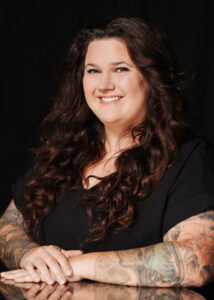 van Heerden is an engagement specialist and the director of the LSU EnvironMentors Program at Louisiana Sea Grant. She is also adjunct faculty in the Department of Environmental Sciences at LSU. As a geospatial socioecologist and environmental educator, her research lies at the intersection of spatial science, place-based education, place identity and nature-society relationships. She investigates how people, across different ages and life stages, form attachments to natural systems and how those attachments foster environmental literacy, stewardship and resilience in Louisiana and the broader Gulf region. Central to her work is the use of mapping as both a scientific and storytelling tool. Her research demonstrates how mapping not only builds technical skills but also deepens place identity and connection to nature. Her work has been supported by the National Academies Gulf Research Program and the National Oceanic and Atmospheric Administration. A Louisiana native, her passion for environmental education is rooted in her lived experience of coastal change. She earned two B.S. degrees, one in environmental science and resource management and one in biology, from California State University, Channel Islands, where she conducted geospatial ecological research in South Africa on game management, southern California on sandy beach ecology and the Cook Islands on coral reef health. van Heerden earned her Ph.D. in oceanography and coastal sciences from LSU, where her dissertation examined how to effectively communicate the value of the wetlands and coast in Louisiana through the ecosystem services framework.
The National Academies’ Gulf Research Program is an independent, science-based program founded in 2013 as part of legal settlements with the companies involved in the 2010 Deepwater Horizon disaster. The National Academies of Sciences, Engineering and Medicine are private, nonprofit institutions that provide independent, objective analysis and advice to the nation to solve complex problems and inform public policy decisions related to science, engineering and medicine. They operate under an 1863 congressional charter.