
Van Lopik Scholarship Recipients for 2026 Announced
Six Louisiana State University (LSU) graduate students are 2026 recipients of the Dr. Jack and Annagreta Hojhdal Van Lopik Superior Graduate Student Research Scholarship.
Jack Van Lopik, the first and longest serving executive director of the Louisiana Sea Grant College Program, and his wife Annagreta Hojhdal Van Lopik, established the scholarship to assist graduate students pursuing advanced degrees in disciplines related to the mission and focus areas of the Louisiana Sea Grant College Program. The intent is to support the Sea Grant mission of furthering the wise and sustainable use of ocean and coastal resources by increasing the number of researchers and the body of knowledge in related fields including but not limited to biology, ecology, geology, fisheries, environmental science, coastal resiliency and design, natural resources economics, environmental education and disaster preparedness and extension.
Applicants must be full-time graduate students at Louisiana State University’s Baton Rouge campus in good academic standing. Scholarship recipients are awarded $10,000 for one year to cover stipend, conference travel, field travel, field experiences and other expenses. Recipients are:
Chance Bennett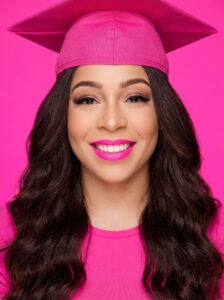
Bennett is a master of arts student in the Lutrill and Pearl Payen School of Education with a concentration in educational technology. She earned her bachelor of arts degree from Louisiana State University (LSU).
Her project, titled Magna Amata: A Narrative-First Environmental Literacy Module Connecting Middle School Girls to Louisiana’s Coastal Systems, includes a digital learning platform and a narrative-first science curriculum for middle school girls. The curriculum teaches biology and Earth systems through storytelling, fashion, games and digital tools. During the scholarship year, Bennett will capture 360-degree images of Louisiana wetlands and build them into virtual tours. Science and education experts will review the lessons before students use them. In her research, Bennett will lead a study of story-led, place-based learning with middle school girls in the Baton Rouge area. She will measure environmental literacy and science identity using pre- and post-instruction testing, student work products and observation. Bennett hopes this approach will help learners see themselves as scientists and prepare them for a workforce shaped by fast-changing technology.
Hannah Craft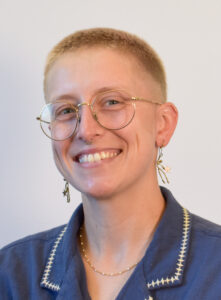
Craft is a doctoral candidate in the Department of Oceanography and Coastal Sciences. They earned their bachelor of science degree from Monmouth University.
Their project, titled Larval Behavior, Dispersal and Metapopulation Connectivity of the Florida Stone Crab in a Changing Ocean, focuses on changes in ocean conditions on larval behavior, survival, dispersal and recruitment of the Florida stone crab. Stone crabs are an economically and environmentally valuable resource along the Gulf coast. Craft plans to use biophysical modeling to determine where the population increases and decreases and estimate the proportion of individuals likely to enter the fishery. They hope this research will provide information to managers, harvesters and policymakers for the Florida stone crab fishery.
Owen Henderson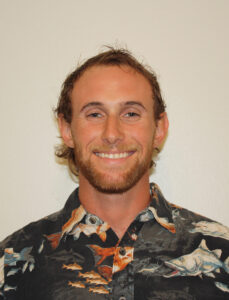
Henderson is pursuing a master of science degree from the School of Renewable Natural Resources. He earned his bachelor of science degree at LSU.
Henderson’s project is titled Describing Regional Diet Composition of both Tripletail (Lobotes surinamensis) and Cobia (Rachycentron canadum) across the Northern Gulf of America. His project looks at the diet of tripletail and cobia to determine how ecology changes distribution, movement and life history. By filling in data gaps, he hopes to support sustainable fisheries and preserve recreational fishing tourism.
Gage Hunter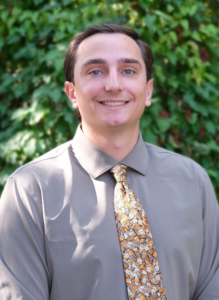
Hunter is a doctoral candidate in the Department of Oceanography and Coastal Sciences. He earned his bachelor of science degree at Edgewood University and his master of science from University of Wisconsin-Milwaukee
Hunter’s project is titled Could Marshes be a Buffer Against Rising Coastal Ocean Acidification in Louisiana? and aims to measure the export of dissolved inorganic carbon (DIC) and alkalinity (ALK) from Louisiana marshes to the coastal ocean. The study will use a novel radioisotope tracer approach to determine if these marshes mitigate or contribute to coastal acidification. This information can be used to help the decision-making in shrimp and shellfish industries.
Max Newman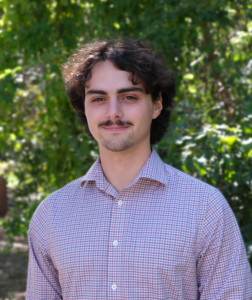
Newman is working toward his master’s degree in the Department of Oceanography and Coastal Sciences at LSU. He earned his bachelor of science degree at Brown University.
His project is titled A Geospatial Analysis of Decadal Changes in Sediment Composition and Water Quality in Lake Maurepas. He will study how Lake Maurepas has changed over the past 23 years and what is causing pollution in the lake. Recent testing found higher levels of organic matter, phosphorus and nickel in the sediment, which can harm fish, wildlife and water quality. The research will look at where these pollutants come from, how they move and stay in the sediment, and how dangerous they are to living organisms. The results will help scientists and resource managers find better ways to reduce pollution, protect coastal habitats, support healthy fisheries and keep local communities safe.
Allison Noble
Noble is a doctoral candidate in the Department of Oceanography and Coastal Sciences. She earned her bachelor and master of science degrees from Northeastern University in Boston, Mass.
Her project is titled Effects of Substrate Type and Acoustic Enhancement on Artificial Reef Benthic Colonization. Artificial reefs provide shelter and feeding habitat, but their effectiveness depends on how closely their physical structure resembles natural reefs. Differences in substrate type, orientation, pore size and material can influence which organisms colonize these habitats and how diverse the resulting communities become. Her study will investigate how substrate type and acoustic enhancement, individually and together, affect the rate and composition of benthic organism colonization. Her research will evaluate whether current restoration techniques create communities similar to natural oyster reefs and whether acoustic enhancement can improve colonization. Ultimately, the study aims to identify strategies for promoting invertebrate settlement on artificial reefs, increasing food availability for economically and recreationally important fish and improving the persistence and ecological function of restored coastal habitats.