
Van Lopik Scholarship Recipients Awarded
Eight Louisiana State University (LSU) graduate students are 2025 recipients of the Dr. Jack and Annagreta Hojhdal Van Lopik Superior Graduate Student Research Scholarship.
Jack Van Lopik, the first and longest serving executive director of the Louisiana Sea Grant College Program at LSU, and his wife Annagreta Hojhdal Van Lopik, established the scholarship to assist graduate students pursuing advanced degrees in disciplines related to the mission and focus areas of the Louisiana Sea Grant College Program. The intent is to support the Sea Grant mission of furthering the wise and sustainable use of ocean and coastal resources by increasing the number of researchers and the body of knowledge in related fields including but not limited to biology, ecology, geology, fisheries, environmental science, coastal resiliency and design, natural resources economics, environmental education and disaster preparedness and extension.
Applicants must be full-time graduate students at LSU in good academic standing. Scholarship recipients are awarded $10,000 for one year to cover stipend, conference travel, field travel, field experiences and other expenses. Recipients are:
Sarah Brannum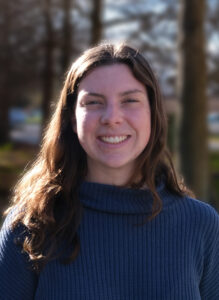
Brannum is a doctoral student in the Department of Oceanography and Coastal Sciences. She earned her bachelor’s degree in geological sciences from the University of North Carolina at Chapel Hill.
Her project, titled Quantifying the Impact of Vegetation Presence, Density and Seasonal Changes on Sedimentation and Water Transport in a River Delta, focuses on how sediment and water move through the Bird’s Foot Delta (BFD) of the larger Mississippi River Delta. Brannum’s research examines how seasonal changes in river hydrology and vegetation influence transport, channel sedimentation and overbank flows that deliver sediment to deltaic wetlands. The work integrates hydrographic surveys, drone-based remote sensing and numerical modeling to evaluate how vegetation can be leveraged to improve coastal resilience at both local and regional scales. By identifying areas of the BFD that receive reduced sediment input, the project supports targeted restoration efforts of the most vulnerable wetlands.
Howard Dunleavy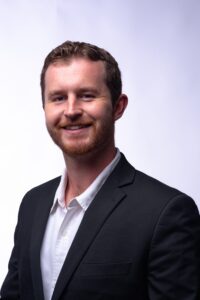
Dunleavy is a master’s student in the Department of Oceanography and Coastal Sciences. He earned his Bachelor of Science degree at Virginia Tech.
His project is titled Ecological Influence of Freshwater Diversions in the Lake Pontchartrain Estuary. The Lake Pontchartrain estuary, an incredibly valuable fishery habitat and coastal resource, is periodically subjected to massive introductions of freshwater from the Mississippi River via the Bonnet Carré Spillway. He is using long-term monitoring data from multiple state and federal organizations in Louisiana to assess the impacts of recent diversion events on the estuarine ecosystems in Pontchartrain basin, with special attention on the fish population. Simultaneously, he’ll be using that same long-term data from Louisiana’s Department of Wildlife and Fisheries to build an interactive web resource that makes decades of fish abundance data available to the public.
Emily F. Hura
Hura is a postdoctoral student in the Department of Renewable Natural Resources. She earned her Bachelor of Science degree from Coastal Carolina University in Conway, SC.
Her two projects, Sex-specific Differences in Habitat Use for Spotted Seatrout in a Dynamic Northern Gulf of Mexico Estuary and Identifying Population Contingents using Biogeochemical Markers in Atlantic Tripletail, use otolith microchemistry — a technique that analyzes fish ear bones to determine when individuals occupied different salinity regimes — to examine differences in habitat use between male and female spotted seatrout and identify nearshore and offshore population contingents of Atlantic tripletail. An important recreational species in Louisiana, spotted seatrout exhibit sex-specific migration patterns influenced by salinity and water temperature. These patterns can lead to skewed harvest rates by anglers and inaccurate estimates of male-to-female ratios used by fisheries managers to assess stock health. Atlantic tripletail is a species experiencing increased fishing effort in recent years. Spatially distinct population contingencies can potentially serve as exploitation refuges for tripletail if there are differences in fishing vulnerability among nearshore and offshore habitats. To support long-term sustainability of the fishery, Hura plans to inform managers of both species ecology and develop outreach materials that promote best harvesting practices among anglers.
Nicholas P. Lonergan
Lonergan is a master’s student in the Department of Oceanography and Coastal Science with a Bachelor of Science degree from LSU’s College of the Coast and Environment.
His project, titled Assessing the Biogeochemical Impacts of Thin-Layer Placement of Dredge Sediment on Louisiana’s Emerging Mangrove Population, investigates thin-layer placement (TLP), a common wetland restoration technique that applies dredged sediment to increase wetland elevation and resilience to sea-level rise. He’s examining how different sediment thicknesses affect soil chemistry and nutrient cycling — such as denitrification, nutrient fluxes, redox conditions and pH — in both expanding black mangrove habitats and spartina marshes. The research aims to improve coastal restoration design by clarifying how sediment-based interventions influence short-term biogeochemical processes and long-term ecosystem health.
Allison Noble
Noble is a doctoral student in the Department of Oceanography and Coastal Sciences. She earned both her master’s and bachelor’s degrees in marine biology from Northeastern University’s Department of Marine and Environmental Sciences in Boston, MA.
Her research, Assessing Productivity on and Around Artificial Reefs in Louisiana Estuaries, examines how artificial reef presence influences primary productivity, invertebrate communities and fish use in coastal Louisiana. By integrating sediment analyses, biological sampling and environmental monitoring, she is evaluating when artificial reefs enhance ecosystem productivity versus when they primarily attract fish, with the goal of informing effective reef placement and management strategies.
Emily S. Robicheaux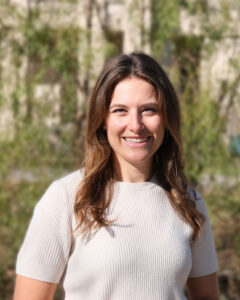
Robicheaux is a master’s student in the School of Renewable Natural Resources. She earned her Bachelor of Science degree in wildlife, fisheries and aquaculture from Mississippi State University in Starkville, MS.
Her research project, Impacts of Estuarine Habitat Restoration on Fish and Invertebrate Communities in Coastal Louisiana, examines how fish and invertebrate assemblages respond to marsh creation projects and living shorelines in south Louisiana. With significant losses of estuarine marshes occurring in Louisiana and worldwide, restoration efforts are increasingly used to offset habitat degradation. Her work evaluates the ecological responses to these projects, helping to inform future restoration decisions by highlighting the associated ecological and economic benefits of estuarine habitat restoration.
Mischa Schultz
Schultz is a doctoral student in the Department of Oceanography and Coastal Sciences. She earned her Master of Science degree in natural resources from the University of Missouri, and a Bachelor of Science degree in natural resources from the University of Georgia.
Schultz’s project is titled Age, Growth and Reproductive Biology of the Greater Amberjack in the Gulf of Mexico. Declines in several reef fish species in the Gulf of Mexico have led to regulatory actions such as decreased bag limits and seasonal closures. Greater amberjack is a reef fish important to both commercial and recreational fisheries, yet, like many other reef fish, greater amberjack has been classified as overfished and undergoing overfishing. Despite the recreational importance of the species, there is a lack of scientific studies on greater amberjack in the Gulf of Mexico. With the aim of better understanding greater amberjack reproductive biology, Schultz’s research will focus on obtaining information on reproductive biology of the species, as well as age and growth, which are necessary for unbiased estimates of stock productivity.
Amaya Wanniarachchi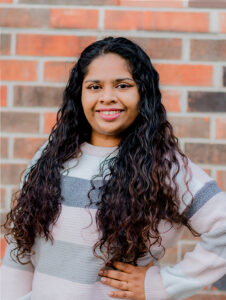
Wanniarachchi is a doctoral student in the Department of Geology and Geophysics. She earned her Bachelor of Science degree in geology at the University of Peradeniya in Sri Lanka.
Her project, titled Vegetation, Sediment and Elevation Dynamics in Deltaic Environments, focuses on plants, sediment and water conditions on the long-term stability of wetlands facing sea-level rise. She’s using high-resolution micro-CT imaging to study how the root systems of common reeds (Phragmites australis) and other native marsh plants affect sediment structure, porosity and overall integrity – key factors in how wetlands build and maintain elevation. Wanniarachchi is also collecting elevation and sediment data from 22 monitoring stations in the Ganges-Brahmaputra-Meghna Delta of Bangladesh to analyze how these conditions affect wetland elevation over time. Using data from both deltas, she hopes to identify the biological and physical processes that allow wetlands to maintain stability in constantly changing environments. This project will provide insights to improve coastal restoration and management strategies.