
Biological Info: Wahoo
About Us | Biological Info | Management Info | Habitat Info | Legal & Socio – Economic Issues | Resources & Publications | Fisheries FAQ
Family Scombridae (Mackerels & Tunas)
|
Scientific Name:
|
Acanthocybium solandri
|
|
Common Names:
|
Robalo |
|
Range & Habitat:
|
Wahoo can be found Gulfwide, wherever blue water is found. They tend to be more common near banks (lumps), drop offs or weed lines. |
|
Identification & Biology:
|
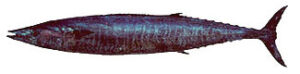
Body color of this fish is blue-green above and lighter below. The body is marked with numerous, wavy, darker, vertical bars. The body is very elongated and streamlined. Wahoo reach over 7 feet long and grow quickly, especially in their first year after hatching. What little research is available suggests that their life span is at least 5 years, and they become large enough to spawn between 34 to 41 inches long. A total of 45 million eggs were counted from an 87-pound female. Wahoo are almost totally fish-eaters. Research done in North Carolina showed that fish accounted for over 97% of their diet and that invertebrates such as squid made up the rest of their total food. Fish consumed include mackerels, butterfishes, porcupine fishes, round herrings, scads, jacks, pompanos, and flying fish. Unlike the other members of the mackerel/tuna family which school or at least form small groups, wahoo are either solitary or found in very small, loosely associated groups. |
|
Size:
|
Relatively common at 50-75 pounds, and can exceed 100 pounds. |
|
Food Value:
|
Excellent, but the flesh can be somewhat dry if fried or overcooked. |