
Dr. Jack and Annagreta Hojhdal Van Lopik Superior Graduate Student Research Scholarship Program
About | Applications | Current Recipients | Past Recipients
Past Scholarship Recipients
2025 – 2026 Scholarship Recipients
Sarah Brannum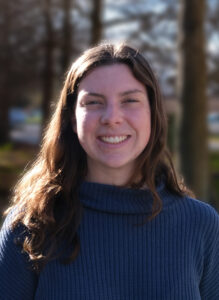
Brannum is a doctoral student in the Department of Oceanography and Coastal Sciences. She earned her bachelor’s degree in geological sciences from the University of North Carolina at Chapel Hill.
Her project, titled Quantifying the Impact of Vegetation Presence, Density and Seasonal Changes on Sedimentation and Water Transport in a River Delta, focuses on how sediment and water move through the Bird’s Foot Delta (BFD) of the larger Mississippi River Delta. Brannum’s research examines how seasonal changes in river hydrology and vegetation influence transport, channel sedimentation and overbank flows that deliver sediment to deltaic wetlands. The work integrates hydrographic surveys, drone-based remote sensing and numerical modeling to evaluate how vegetation can be leveraged to improve coastal resilience at both local and regional scales. By identifying areas of the BFD that receive reduced sediment input, the project supports targeted restoration efforts of the most vulnerable wetlands.
Howard Dunleavy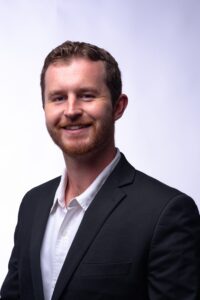
Dunleavy is a master’s student in the Department of Oceanography and Coastal Sciences. He earned his Bachelor of Science at Virginia Tech.
His project is titled Ecological Influence of Freshwater Diversions in the Lake Pontchartrain Estuary. The Lake Pontchartrain estuary, an incredibly valuable fishery habitat and coastal resource, is periodically subjected to massive introductions of freshwater from the Mississippi River via the Bonnet Carré Spillway. He is using long-term monitoring data from multiple state and federal organizations in Louisiana to assess the impacts of recent diversion events on the estuarine ecosystems in Pontchartrain basin, with special attention on the fish population. Simultaneously, he’ll be using that same long-term data from Louisiana’s Department of Wildlife and Fisheries to build an interactive web resource that makes decades of fish abundance data available to the public.
Emily F. Hura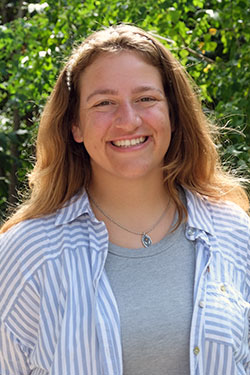
Hura is a doctoral student in the Department of Renewable Natural Resources. She earned her Bachelor of Science degree from Coastal Carolina University in Conway, SC
Her two projects, Sex-specific Differences in Habitat Use for Spotted Seatrout in a Dynamic Northern Gulf Estuary and Identifying Population Contingents using Biogeochemical Markers in Atlantic Tripletail, use otolith microchemistry — a technique that analyzes fish ear bones to determine when individuals occupied different salinity regimes — to examine differences in habitat use between male and female spotted seatrout and identify nearshore and offshore population contingents of Atlantic tripletail. An important recreational species in Louisiana, spotted seatrout exhibit sex-specific migration patterns influenced by salinity and water temperature. These patterns can lead to skewed harvest rates by anglers and inaccurate estimates of male-to-female ratios used by fisheries managers to assess stock health. Atlantic tripletail is a species experiencing increased fishing effort in recent years. Spatially distinct population contingencies can potentially serve as exploitation refuges for tripletail if there are differences in fishing vulnerability among nearshore and offshore habitats. To support long-term sustainability of the fishery, Hura plans to inform managers of both species ecology and develop outreach materials that promote best harvesting practices among anglers.
Nicholas P. Lonergan
Lonergan is a master’s student in the Department of Oceanography and Coastal Science with a Bachelor of Science degree from LSU’s College of the Coast and Environment.
His project, titled Assessing the Biogeochemical Impacts of Thin-Layer Placement of Dredge Sediment on Louisiana’s Emerging Mangrove Population, investigates thin-layer placement (TLP), a common wetland restoration technique that applies dredged sediment to increase wetland elevation and resilience to sea-level rise. He’s examining how different sediment thicknesses affect soil chemistry and nutrient cycling — such as denitrification, nutrient fluxes, redox conditions and pH — in both expanding black mangrove habitats and spartina marshes. The research aims to improve coastal restoration design by clarifying how sediment-based interventions influence short-term biogeochemical processes and long-term ecosystem health.
Allison Noble
Noble is a doctoral student in the Department of Oceanography and Coastal Sciences. She earned both her master’s and bachelor’s degrees in marine biology from Northeastern University’s Department of Marine and Environmental Sciences in Boston, MA.
Her research, Assessing Productivity on and Around Artificial Reefs in Louisiana Estuaries, examines how artificial reef presence influences primary productivity, invertebrate communities and fish use in coastal Louisiana. By integrating sediment analyses, biological sampling and environmental monitoring, she is evaluating when artificial reefs enhance ecosystem productivity versus when they primarily attract fish, with the goal of informing effective reef placement and management strategies.
Emily S. Robicheaux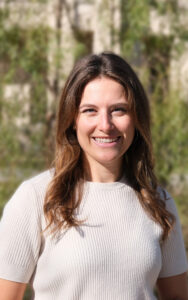
Robicheaux is a master’s student in the School of Renewable Natural Resources. She earned her Bachelor of Science degree in wildlife, fisheries and aquaculture from Mississippi State University in Starkville, MS.
Her research project, Impacts of Estuarine Habitat Restoration on Fish and Invertebrate Communities in Coastal Louisiana, examines how fish and invertebrate assemblages respond to marsh creation projects and living shorelines in south Louisiana. With significant losses of estuarine marshes occurring in Louisiana and worldwide, restoration efforts are increasingly used to offset habitat degradation. Her work evaluates the ecological responses to these projects, helping to inform future restoration decisions by highlighting the associated ecological and economic benefits of estuarine habitat restoration.
Mischa Schultz
Schultz is a doctoral student in the Department of Oceanography and Coastal Sciences. She earned her Master of Science degree in natural resources from the University of Missouri, and a Bachelor of Science degree in natural resources from the University of Georgia.
Schultz’s project is titled Age, Growth and Reproductive Biology of the Greater Amberjack in the Gulf. Declines in several reef fish species in the Gulf have led to regulatory actions such as decreased bag limits and seasonal closures. Greater amberjack is a reef fish important to both commercial and recreational fisheries, yet, like many other reef fish, greater amberjack has been classified as overfished and undergoing overfishing. Despite the recreational importance of the species, there is a lack of scientific studies on greater amberjack in the Gulf. With the aim of better understanding greater amberjack reproductive biology, Schultz’s research will focus on obtaining information on reproductive biology of the species, as well as age and growth, which are necessary for unbiased estimates of stock productivity.
Amaya Wanniarachchi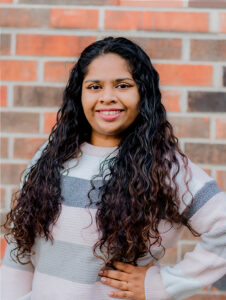
Wanniarachchi is a doctoral student in the Department of Geology and Geophysics. She earned her Bachelor of Science degree in geology at the University of Peradeniya in Sri Lanka.
Her project, titled Vegetation, Sediment and Elevation Dynamics in Deltaic Environments, focuses on plants, sediment and water conditions on the long-term stability of wetlands facing sea-level rise. She’s using high-resolution micro-CT imaging to study how the root systems of common reeds (Phragmites australis) and other native marsh plants affect sediment structure, porosity and overall integrity – key factors in how wetlands build and maintain elevation. Wanniarachchi is also collecting elevation and sediment data from 22 monitoring stations in the Ganges-Brahmaputra-Meghna Delta of Bangladesh to analyze how these conditions affect wetland elevation over time. Using data from both deltas, she hopes to identify the biological and physical processes that allow wetlands to maintain stability in constantly changing environments. This project will provide insights to improve coastal restoration and management strategies.
2024 – 2025 Scholarship Recipients
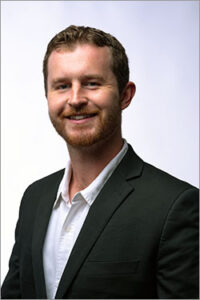 Howard Dunleavy is a master’s student in the Department of Oceanography and Coastal Sciences. He earned his Bachelor of Science at Virginia Tech.
His project is titled Long-term Trends in Gulf Fisheries Populations in Response to a Changing Climate. The fisheries industry in Louisiana brings in nearly $2 billion annually. His research aims to answer the questions of how Gulf of Mexico fisheries might respond to climate changes and rising aquatic temperatures by analyzing long-term, fishery-independent data collected by the Louisiana Department of Wildlife and Fisheries (LDWF). He envisions his findings will help organizations like LDWF and the Coastal Protection and Restoration Authority (CPRA) improve upon their best management practices for sustainable use of coastal natural resource.
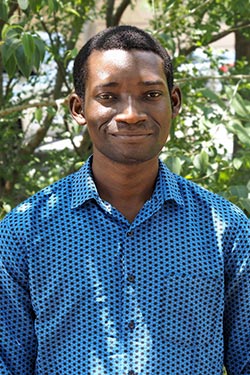
Ebenezer Etsiwah is pursuing a master of science degree in civil engineering in the Department of Civil and Environmental Engineering. He earned his bachelor of science degree in chemical engineering from Kwame Nkrumah University of Science and Technology in Kumasi, Ghana.
His research project is titled A Novel Disinfection Technology for Onsite Wastewater Treatment using UV-LEDs. Soil conditions of Louisiana, particularly Tangipahoa Parish, make the suitability of onsite wastewater treatment systems – such as septic systems – a challenge. Sewage runoff through ditches and aerated treatment units during intense rainfall has a cumulative impact on nearby water bodies. Recent advances in the use of germicidal ultraviolet light-emitting diodes (LEDs) with wastewater treatment look to be a promising solution. As part of the project, a solar-powered disinfection reactor using LEDs and low doses of chlorine will be developed and tested for its effectiveness with aerated treatment units in the parish.
 Daniel W. Harris is a master’s student in the Department of Agricultural Economics. He earned his Bachelor of Science degree in agricultural economics at Louisiana State University.
His project is titled Fishing for Solutions: Compensation for Bycatch Reduction in the Gulf Shrimp Fishery. Bycatch reduction devices (BRDs) are used to reduce unwanted finfish captured in shrimp trawls. Payments for ecosystem services (PES) is compensation to shrimp boats for using BRDs. As part of this project, surveys are collected from commercial shrimpers to determine their willingness to accept compensation to voluntarily place a new BRD in in their nets, with the goal of reducing bycatch. The results of this research may provide evidence to the National Oceanic and Atmospheric Administration (NOAA) that some commercial shrimpers are willing to voluntarily pull a new BRD for a payment level determined by NOAA.
 Madelyn Y. Hathcock is pursuing a Master of Science degree in civil engineering in the Department of Civil and Environmental Engineering. She earned her Bachelor of Science degree in environmental engineering from LSU.
Her project is titled Hydroxylamine Driven Nitrous Oxide Formation in Wastewater Chlorination. This research focuses on the discovery of the seemingly unknown reaction between hydroxylamine (NH₂OH) and chlorine used in wastewater treatment. Within the chlorine contact basins of wastewater treatment plants, chlorine is added to the NH₂OH-containing wastewater, which results in the production of nitrous oxide (N₂O) – a potent greenhouse gas – being emitted into the atmosphere. This project is to quantify the overlooked NH₂OH-sourced N₂O gas formation potential in several wastewater sources. This research aims to also establish a method for the quantification of NH₂OH at low detection ranges, as well as standard NH₂OH sample collection, handling, and storage protocols.
 Emily F. Hura is a master’s student in the Department of Renewable Natural Resources. She earned her Bachelor of Science degree at Coastal Carolina University in Conway, SC.
Her research project is titled Sex-specific Differences in Habitat use for Spotted Seatrout in a Dynamic Northern Gulf Estuary. An important species along the northern Gulf, spotted seatrout is only harvested recreationally in Louisiana. However, population distributions indicate sexually specific migration patterns based on salinity and water temperature. This in turn can lead to skewed sex-specific harvest rates by anglers, as well as create incorrect estimates of male-female ratios that fishery managers need to assess the size and health of fishery stocks. To help maintain the sustainability of the fishery, Hura plans to develop harvesting best practices outreach materials for anglers to increase sustainability in the spotted seatrout fishery.
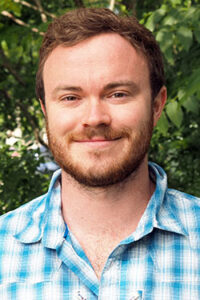 Lee A. Potter is a doctoral student in the Department of Oceanography and Coastal Sciences. He earned his Bachelor of Science in environmental science from Washington College in Chestertown, Maryland. His Master of Science degree in Renewable Natural Resources was completed at LSU.
His project, titled Climate-Driven Perspective of Phosphorus Dynamics in Coastal Watersheds: Implications for Harmful Algal Blooms, focuses on phosphorus as an essential nutrient in coastal ecosystems and water quality. When excess phosphorus loads are released in waterways like the Lake Pontchartrain Estuary (LPE), harmful algal blooms (HABs) can arise and impact economies and communities that utilize the estuary. This project aims to determine the magnitude and distribution of phosphorus in the LPE. This research should enable watershed managers to understand the cause of HABs better and work to predict when they might occur.
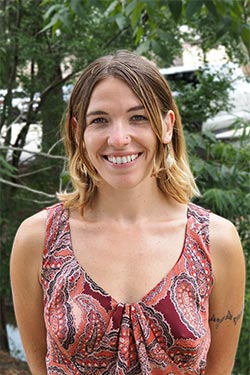
Mischa Schultz is a doctoral student in the Department of Oceanography and Coastal Sciences. She earned her master of science degree in natural resources from the University of Missouri, and a bachelor of science degree in natural resources from the University of Georgia.
Her dissertation is titled Greater Amberjack Life History in the Gulf. Declines in a number of reef fish species in the Gulf have led to regulatory actions such as decreased bag limits and seasonal closures. Greater amberjack is a reef fish important to both commercial and recreational fisheries, yet, like many other reef fish, greater amberjack has been classified as overfished and undergoing overfishing. Despite the recreational importance of the species, there is a lack of scientific studies on greater amberjack in the Gulf. With the aim of better understanding greater amberjack life history, Mischa’s research will focus on describing the feeding habits and diet variability of greater amberjack and will characterize the reproductive biology of the species.
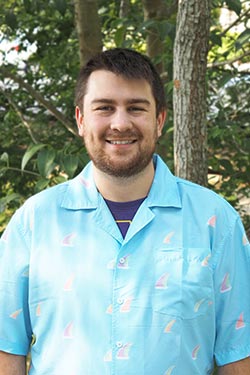
Daniel Sinopoli is a doctoral student in the Department of Biological Sciences. He earned his master of science degree in fish and wildlife biology management from the State University of New York, College of Environmental Science and Forestry, and his bachelor of science degree in aquatics and fisheries science from the same institution.
His research project is titled Resurrecting the Ancient: New Analyses Reveal Unrecognized Multiplicity in a Widespread Ancient-lineage Fish. Spotted gar is a widespread species with the core of its range comprising the Mississippi River Basin, the Gulf Coast drainages from northeastern Mexico to the Apalachicola River in Florida and the Rio Grande River as far upstream as the Trans-Pecos region of Texas. There is also a disjunct and rarely observed northern population of spotted gar in southern Michigan and parts of the Great Lakes. In the late 19th century, taxonomists often described similar or identical animals nearly simultaneously, without instantaneous access to the work of their peers, resulting in redundant descriptions. Ultimately, many of these species’ names were invalidated or “sunk,” synonymized under a single name. Between 1858 and 1870, five gar species were described that would ultimately become the single spotted gar we know today. The downside to lumping species prior to genetic analyses is that it can invalidate a potentially valid species name by listing it as a synonym. This project will use molecular and geometric morphometric techniques to re-examine the five synonyms of spotted gar described across its distribution to determine if any synonyms are valid species and should be split from true spotted gar.
2023 – 2024 Scholarship Recipients
Ebenezer Etsiwah is pursuing a master of science degree in civil engineering in the Department of Civil and Environmental Engineering. He earned his bachelor of science degree in chemical engineering from Kwame Nkrumah University of Science and Technology in Kumasi, Ghana.
His research project is titled A Novel Disinfection Technology for Onsite Wastewater Treatment using UV-LEDs. Soil conditions of Louisiana, particularly Tangipahoa Parish, make the suitability of onsite wastewater treatment systems – such as septic systems – a challenge. Sewage runoff through ditches and aerated treatment units during intense rainfall has a cumulative impact on nearby water bodies. Recent advances in the use of germicidal ultraviolet light-emitting diodes (LEDs) with wastewater treatment look to be a promising solution. As part of the project, a solar-powered disinfection reactor using LEDs and low doses of chlorine will be developed and tested for its effectiveness with aerated treatment units in the parish.
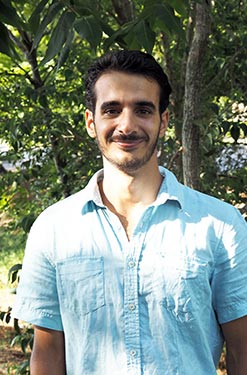 Wissam Jawad is a doctoral student in the Department of Biology. He earned a bachelor of arts degree in zoology from Michigan State University.
His research project is titled Understanding the Impact of Heat Waves on the Marsh Periwinkle (Littoraria irrorata) in Louisiana and Across the Species Range. Heat waves can have severe negative impacts on natural communities by causing mass mortalities. In sub-tropical regions such as coastal Louisiana, heat waves can be particularly threatening because many coastal species are already living at their upper temperature limits. Species like the common marsh periwinkle can avoid high temperatures by seeking cooler microhabitats which can increase their exposure to other threats, like predators. The project will investigate how heat waves can impact marsh periwinkles in the wild by altering their vulnerability to blue crabs. As a key species that influences the structure of salt marsh ecosystems, understanding how heat waves impacts marsh periwinkles could be vital for predicting the future health of salt marshes.
Mischa Schultz is a doctoral student in the Department of Oceanography and Coastal Sciences. She earned her master of science degree in natural resources from the University of Missouri, and a bachelor of science degree in natural resources from the University of Georgia.
Her dissertation is titled Greater Amberjack Life History in the Gulf. Declines in a number of reef fish species in the Gulf have led to regulatory actions such as decreased bag limits and seasonal closures. Greater amberjack is a reef fish important to both commercial and recreational fisheries, yet, like many other reef fish, greater amberjack has been classified as overfished and undergoing overfishing. Despite the recreational importance of the species, there is a lack of scientific studies on greater amberjack in the Gulf. With the aim of better understanding greater amberjack life history, Mischa’s research will focus on describing the feeding habits and diet variability of greater amberjack and will characterize the reproductive biology of the species.
Daniel Sinopoli is a doctoral student in the Department of Biological Sciences. He earned his master of science degree in fish and wildlife biology management from the State University of New York, College of Environmental Science and Forestry, and his bachelor of science degree in aquatics and fisheries science from the same institution.
His research project is titled Resurrecting the Ancient: New Analyses Reveal Unrecognized Biodiversity in a Widespread Ancient-lineage Fish. Spotted gar is a widespread species with the core of its range comprising the Mississippi River Basin, the Gulf Coast drainages from northeastern Mexico to the Apalachicola River in Florida and the Rio Grande River as far upstream as the Trans-Pecos region of Texas. There is also a disjunct and rarely observed northern population of spotted gar in southern Michigan and parts of the Great Lakes. In the late 19th century, taxonomists often described similar or identical animals nearly simultaneously, without instantaneous access to the work of their peers, resulting in redundant descriptions. Ultimately, many of these species’ names were invalidated or “sunk,” synonymized under a single name. Between 1858 and 1870, five gar species were described that would ultimately become the single spotted gar we know today. The downside to lumping species prior to genetic analyses is that it can invalidate a potentially valid species name by listing it as a synonym. This project will use molecular and geometric morphometric techniques to re-examine the five synonyms of spotted gar described across its distribution to determine if any synonyms are valid species and should be split from true spotted gar.