
Undergraduate Research Opportunities Program
About UROP | FAQs | Funded Projects | Application | Contact
Funded Projects: 2026
| Student | Project Title | Faculty Sponsor |
|
Kara Brady
McNeese State University
|
Multi-Phase Modeling of Wave–Debris–Structure Interaction for Coastal Infrastructure Resilience in Louisiana | Wen-Huai Tsao |
|
Kaylene Gohman
McNeese State University
|
Uncertainty Quantification of Wave Attenuation by Louisiana Mangrove Forests Using Multi-Fidelity Surrogate Models | Wen-Huai Tsao |
|
Maci Louque
University of Louisiana at Lafayette
|
Characterization of antimicrobial properties in garfish blood | Emily Kane |
|
Noah Rachal
University of Louisiana at Lafayette
|
A3H: Agentic AI for Aquatic Habitats – Autonomous Sensing and Decision-making for Water Ecosystems | Sercan Aygun |
|
Kristen Webster
Tulane University
|
Seasonal changes in the freeze tolerance and physiological adaptations of three species of intertidal gastropods from southeastern Alaska. | Sunshine Van Bael |
Kara Brady, McNeese State University
Faculty Advisor: Wen-Huai Tsao
Title: Multi-Phase Modeling of Wave–Debris–Structure Interaction for Coastal Infrastructure Resilience in Louisiana
Louisiana’s coastal infrastructure, including bridges, ports and petrochemical facilities, faces critical threats from hurricane-driven debris that standard models fail to predict. This project, leveraging the Proteus open-source toolkit and the Cut Finite Element Method (CutFEM) for modeling moving boundaries, aims to develop a reliable, multi-phase and hydrodynamic framework to accurately simulate debris impacts with infrastructure. This initiative will provide essential predictive data for designing resilient infrastructure and enhance coastal defenses.
Kaylene Gohmann, McNeese State University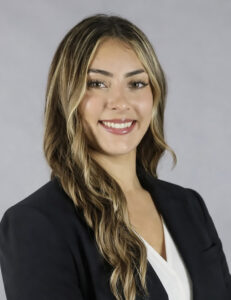
Faculty Advisor: Wen-Huai Tsao
Title: Uncertainty Quantification of Wave Attenuation by Louisiana Mangrove Forests Using Multi-Fidelity Surrogate Models
Louisiana’s rapidly eroding coastline faces increasing threats from sea-level rise and storms, highlighting the potential of mangrove forests as vital living barriers for wave mitigation. The project’s goal is not to construct a single, detailed model of one storm event, but to build a fast, reliable modeling system capable of exploring thousands of combinations of storms, water levels and mangrove conditions. By delivering rapid, trustworthy predictions, the modeling framework supports long-term resilience planning and can eventually be integrated into real-time hurricane response.
Maci Louque, University of Louisiana at Lafayette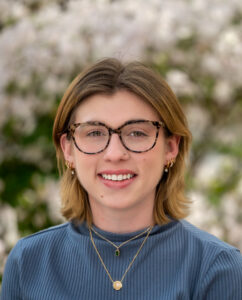
Faculty Advisor: Emily Kane
Title: Substrate Preferences of Blennies on Artificial Reefs
Louisiana has one of the largest artificial reef programs in the world, part of an initiative to support the recreational fishing industry that has an economic impact of more than $1.3 billion annually. This project will examine substrate preferences of benthic blennies (Scartella cristata), a key prey species for recreationally important, pelagic piscivores. Researchers will investigate how specialized fin structures enable blennies to maintain their position on reefs during high-flow events like hurricanes. This analysis will look at assessing the resilience of this prey base and how it can serve as a vital indicator of long-term artificial reef stability and productivity, while also providing insights on types of materials suitable for artificial reefs.
Noah Rachal, University of Louisiana at Lafayette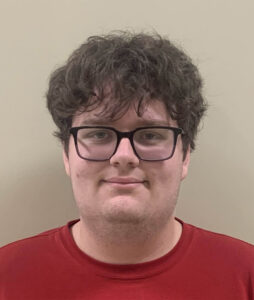
Faculty Advisor: Sercan Aygun
Title: A3H: Agentic AI for Aquatic Habitats – Autonomous Sensing and Decision-making for Water Ecosystems
Constant changes along Louisiana’s coast requires constant monitoring. In this project, researchers will develop a low-cost, low-power A3H (Agentic Artificial Intelligence for Aquatic Habitats) edge-based monitoring device that small-scale fishers, oyster farmers, crawfish and rice farmers, and coastal residents can use to track water conditions, near-by boat traffic and visible debris. The technology’s initial deployment to collect training data will be in the Atchafalaya region.
Kristen Webster, Tulane University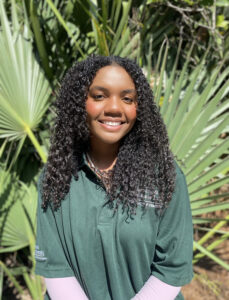
Faculty Advisor: Sunshine Van Bael
Title: Do Baldcypress Host Traits Shape Endosphere and Rhizosphere Bacteria?
Baldcypress swamps in the Southeast U.S. are essential for carbon sequestration and coastal protection, yet the swamps are increasingly converting to open water due to altered hydrology and saltwater intrusion. This research will determine how host-level factors, such as genotype and root traits, influence the root-associated microbial communities that support tree stress tolerance. The study will help in the understanding of why some baldcypress lineages handle salt stress better than others.